Nuclear Proliferation
The Necessary Evil
While the existence of nuclear weapons is undeniably immoral, their role within the field of geopolitics has led many to consider them a 'necessary evil'. While it would be ideal for the world to somehow rid itself of nuclear weapons, logic tells us that such a circumstance cannot occur, therefore, we must continue to live in a world defined by the relationship between nuclear weapons and their use as a deterrent. The situation where mutual assurance of destruction keeps superpowers from physically engaging one another. The deterrent effect of nuclear weapons is not only the fear of their use, it has been demonstrated that the technical complexity of developing and producing nuclear weapons has created a barrier to entry that would prevent a rogue leader from producing enough nuclear weapons to attain the same level of destruction as the world's superpowers.

Technical Barriers Protect Against Nuclear Proliferation
The extreme degree of mathematical and technical accuracy required to create a nuclear weapon creates a significant technical barrier to prevent unstable nations from creating such weapons in large quantities. Having a few nuclear weapons is ominous, but the odds multiply exponentially once an unstable nation has arsenals of thousands of nuclear warheads. For instance, North Korea currently has about 50 nuclear warheads, which is the smallest stockpile among the nine nations that have nuclear weapons, where the U.S. and Russia each have estimated stockpiles of 5200–5500 nuclear warheads. This vast discrepancy between North Korea's arsenal and that of the superpowers reinforces the extent of the engineering and infrastructure difficulties involved with creating the numbers of warheads necessary to be considered a major nuclear power thus, they can effectively limit the levels of destruction by unstable actors.
Nuclear Deterrence
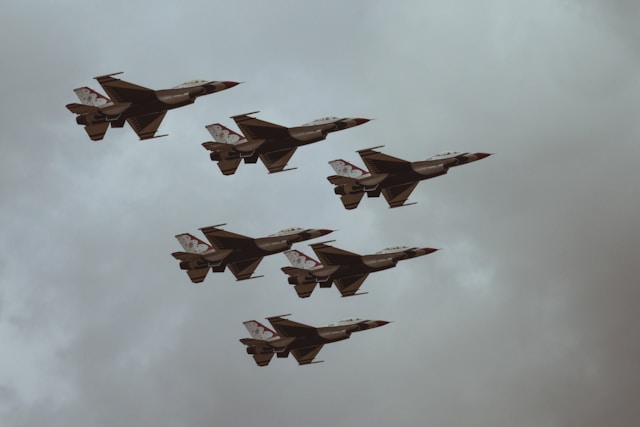
It is not just the warhead, it is also the delivery system that must be sophisticated enough to deter an adversary. A nuclear power must have the ability to address this issue as well as develop a Nuclear Triad to achieve the level of power to be recognized as a superpower. That means it must have the ability to deploy nuclear weapons from land-based missile silos, submarine launched missiles, and strategic bombers. This redundancy is critical so that even if a nation is the victim of a nuclear attack, the nation is able to have a second strike capability. Smaller and less stable nations face a huge obstacle in developing the engineering ability to build stealthy submarines or stealth bombers, making it virtually impossible due to both financial constraints and scientific knowledge. As a result, these nations can create localized problems with their small numbers of available warheads but do not have the necessary multi-faceted infrastructure to influence the global system or survive in a holocaust of total nuclear war.

A World Without Weapons
In the end, there is no way to put this "genie" back into the bottle. The weight of moral considerations surrounding nuclear weapons is considerable, however, we must recognise that, in addition to the significant moral challenges, nuclear weapons represent an entirely different level of complexity in terms of their impact on the strategic calculus of the world when we compare them to previous systems of warfare. As well as presenting extreme technical and mathematical challenges, the difficulty of "building" a nuclear weapon creates a layer of protection through the bottleneck created by the limited number of countries with sustainable infrastructures capable of supporting their development. If it were not for these challenges preventing proliferation from growing out of control and becoming a multi-polar free-for-all with multiple unstable players, there is little likelihood that nuclear weapons would have been able to sustain any significant amount of time before establishing a potential catalyst that would ignite a multi-national nuclear conflict resulting in a "nuclear winter." Thus, as we move forward with our efforts towards abolishing nuclear weapons, the continued existence of nuclear weapons will play a major role in preventing any small-scale incidents from escalating to the level of a global nuclear winter.